MAGAZINE
MAGAZINE
MAGAZINE
MAGAZINE
By cizucu ·
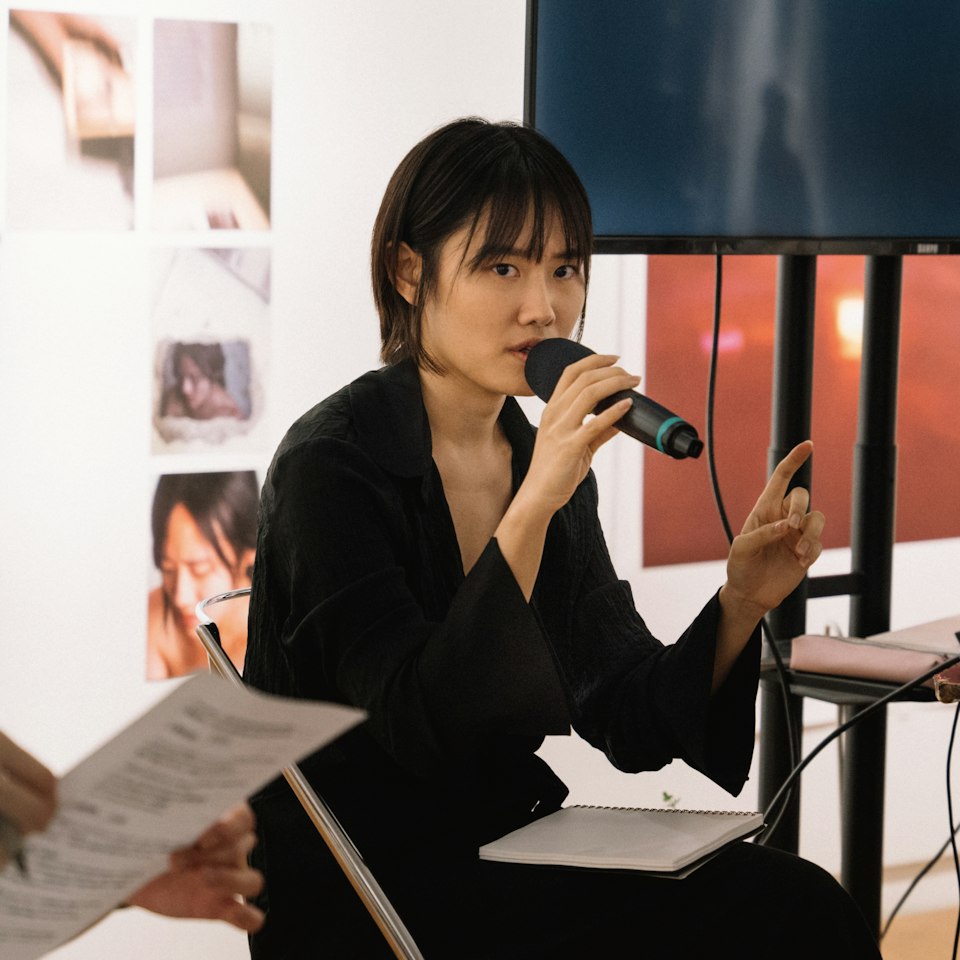
©︎ Yang Chia-Hsin|楊佳馨
Through interviews with practitioners pursuing distinctive approaches to photographic expression, we delve into the origins, ideas, and processes behind their creative practices, bringing fresh inspiration to photographers and photography media worldwide.
Yang Chia-Hsin is a visual artist based in Taiwan. Archiving the origins of her practice—as well as the ideas and perspectives she holds dear—in the language of our time will surely help sustain the photography culture of the future.
Through these “10 Questions,” we explore the process through which her artistic expression takes form.
©︎ Yang Chia-Hsin | 楊佳馨
Yang Chia-Hsin | 楊佳馨
Born in Tainan, Taiwan, Yang Chia-Hsin is a visual artist currently based in Taipei. Through photography, video installation, and artist’s books, she explores affective narratives surrounding embodied experience, intimate relationships, illness, trauma, and memory.
Her work has been presented at the Shanghai International Photography Festival, Jimei × Arles International Photo Festival, and Tainan International Foto Festival in Taiwan. Her honors include the Moving Image Curator Award and Book Fair Jury Award at Jimei × Arles International Photo Festival, as well as an Excellence Award at the 1839 Photography Award. Her practice now also encompasses exhibition-making, symposia, and workshops.
Instagram: @_yang_foto
My current practice considers embodied experience, intimate relationships, affective narratives arising from illness and trauma, fragmented perception, bodily sensation, and multisensory worlds.
By bringing private experiences into the public realm, I also research themes including social and familial structures, social calamities, and the philosophy of medicine. From the multilayered effects that extend from the individual to the collective, to the physical and psychological transformations experienced by those confronting traumatic memories, and the materiality and transposition of media, I explore “public intimacy” as a curatorial theme.
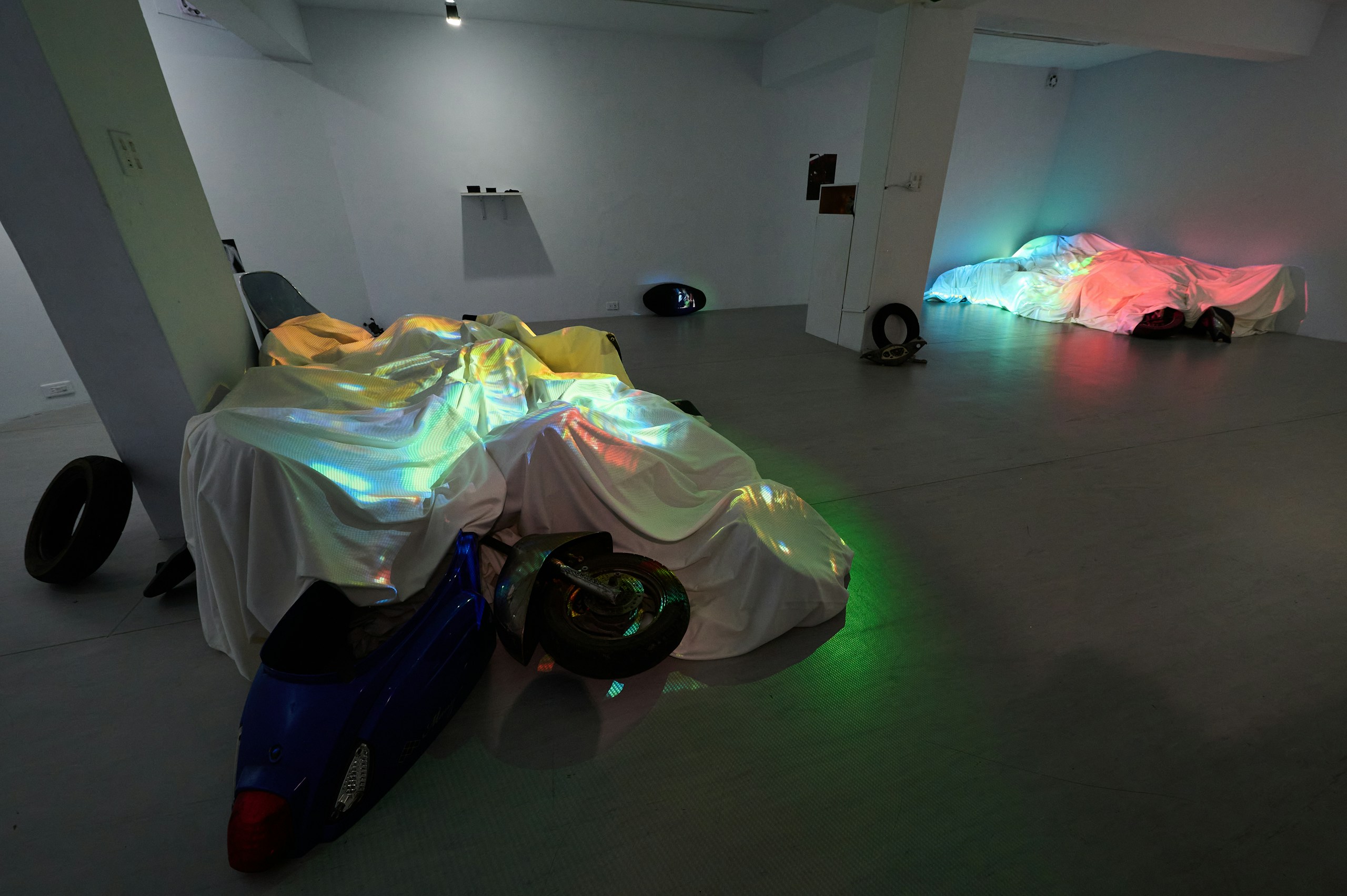
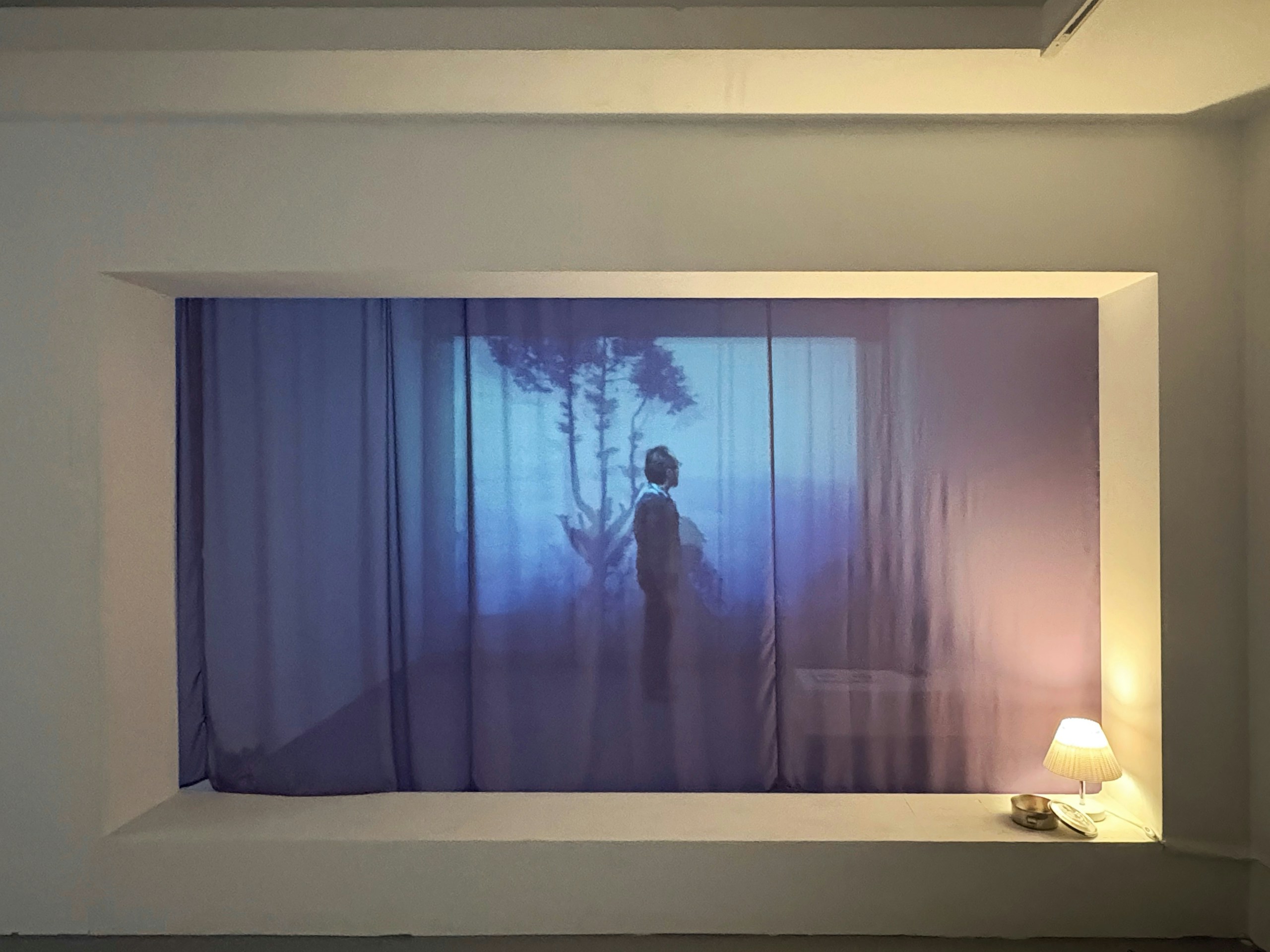
©︎ Yang Chia-Hsin, Vague, two-channel video projection, fabric, motorcycle scrap, 7 min. 59 sec., 2024. Centered on processing the experience of a traffic accident, the work explores how one might confront trauma in its aftermath through the experience of the event itself.
My first encounters with photography came through a high-school photography class and my photography teacher. At the time, I carried a camera every day, took photographs after school, and worked on photographic projects. That was where I acquired the foundations of photography and developed my aesthetic sensibility.
At university, I experimented with a range of mixed-media practices: integrating photographs and physical materials into semi-sculptural installations, and producing site-responsive soft sculptures incorporating moving image. Through diverse materials and textures, I explored private embodied experiences.
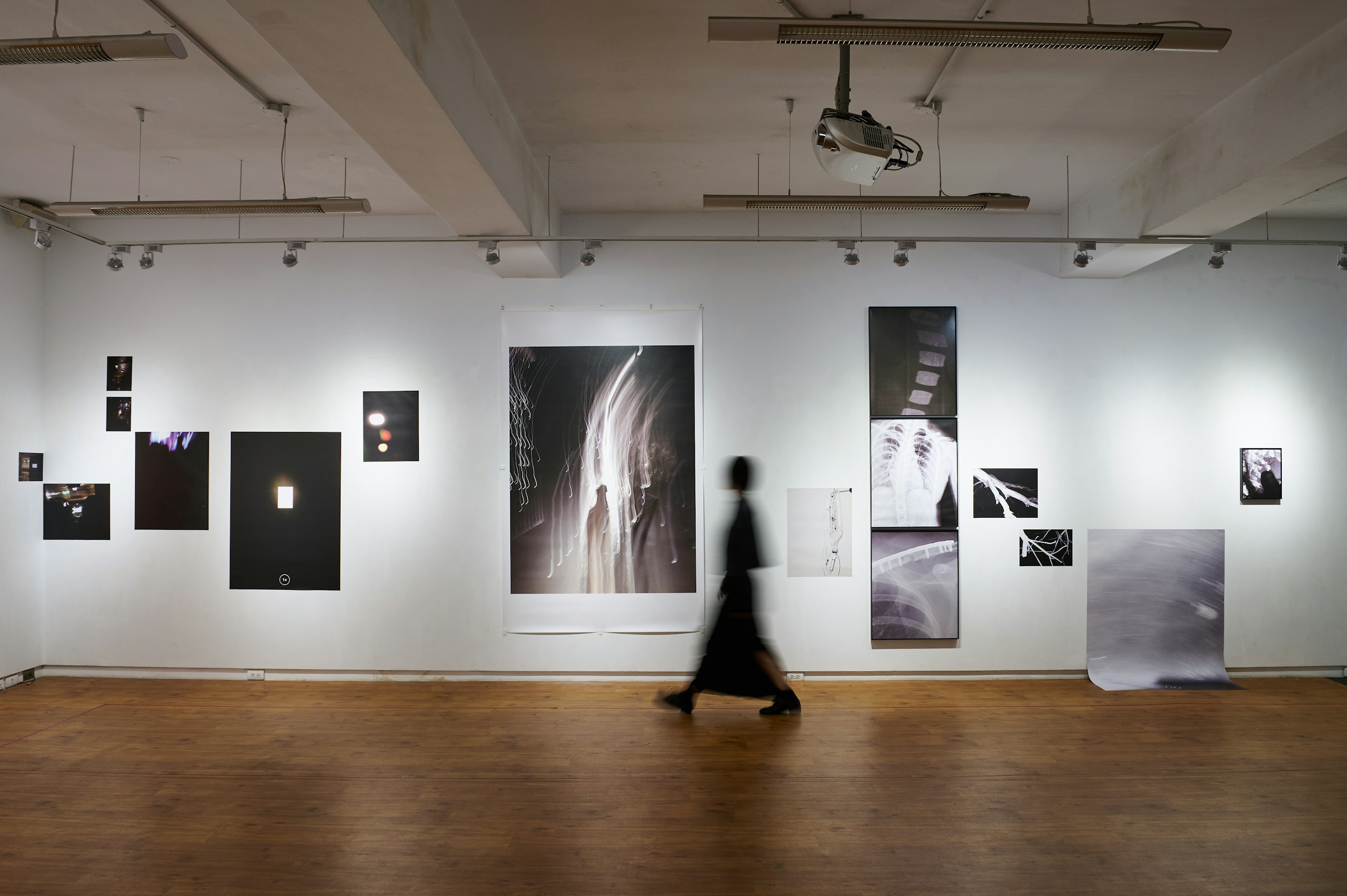
©︎ Yang Chia-Hsin, The Chaos Abys, digital prints, photographic paper, iron nails, 2024. The work attempts to organize four spectra of life through which people confront birth, living, death, and mortality.
One of the most profound turning points in my creative journey was the unexpected recurrence of an illness. That experience led me to place greater emphasis on the process of “self-restoring from trauma through embodied experience.” After recovering, I began producing several series of work.
Rather than “photography,” I think “image” is the more precise term. For me, the image is a material of artistic production.
My practice draws on many materials: images, documents and texts, archives, and events I have personally experienced. Among them, the image has the capacity to mobilize, translate, and evoke such varied dimensions as experience, recollection, and memory. At times, it can also function as a revelatory medium.
©︎ Yang Chia-Hsin, Toward a Home series, fabric screens, single-channel video, photographs, artist’s book, sound installation, readymades, 2026. The series organizes family archives and records centered on the home.
Images begin in the private sphere, yet they circulate and proliferate on a massive scale, saturating both the material society in which we live and the space of the internet. Consequently, “everyday mythologies” and “embodied experience” are also starting points for my practice, while “visual translation” is the method that connects making and thinking.
I believe what one values changes according to the encounters and circumstances that arise in the course of making. It is less about a single artwork or project than an attitude toward artistic practice itself.
In recent years, I have emphasized interpretations and translations of the “circuitous,” because they allow me to engage with every possibility. I also approach circuitousness as an artistic position, hoping each work will expand toward different subjects, scholarly dimensions, details, and depths.
For me, layers of time and sensation that may appear to be detours are also a means of drawing closer to the body and memory.
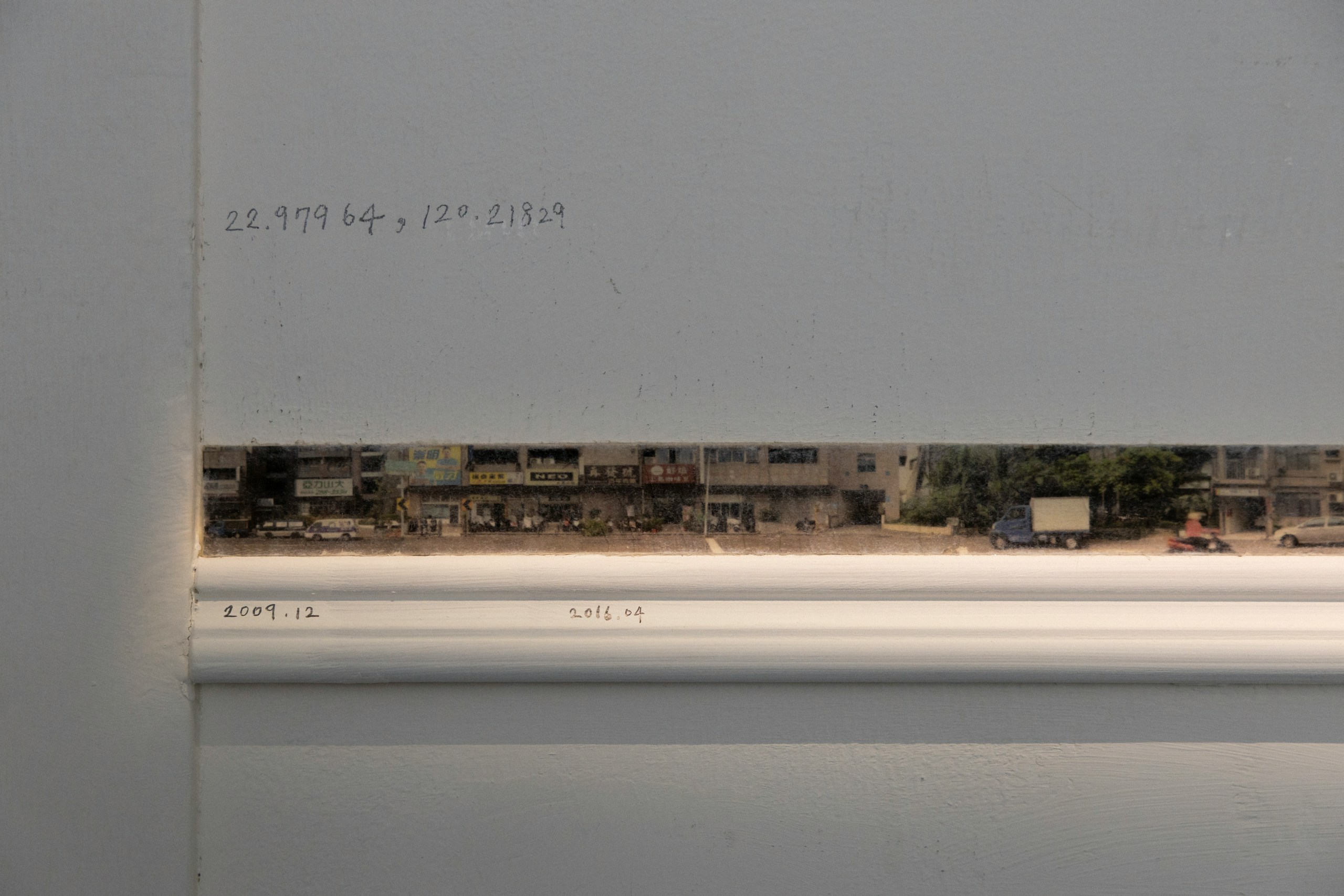
©︎ Yang Chia-Hsin, The Borderwalker, photographs, kozo paper, sound installation, 7 min. 26 sec., 2025.
The term “circuitous” derives from the classical parallel prose text Preface on Returning to Jizhou and Bidding Farewell to Friends in Luoyang by Wang Bo, a writer of China’s early Tang dynasty. It describes actions, paths, and journeys that wind and circle, and by extension, reaching a destination through indirect means. Within the creative thinking and practice I value, I develop the term into three perspectives through which to understand artistic production: spatial circuity, circuitous reflection within the psyche and thought, and the manifold circuits of lived experience and bodily sensation—embodied experience.
My practice often focuses on embodied experience, experiences of illness, the psychology of illness, post-traumatic re-experiencing, familial experience, and women’s trauma across generations. Treating each as a critical concern, I continue my inquiry by connecting diverse fields including sociology, psychology, the philosophy of medicine, iconography, and art history. The impetus for this practice comes from the embodied pain I felt when confronting my own body.
The experience of pain is sensory in the broadest sense, yet it exposes every detail. Its particularity emerges from the accumulation of small events in each person’s life. Pain may be the sensation of an injured body, a reinterpretation of scars and physical traces, or the way an individual experience of suffering can awaken collective empathy.
I find “chance, contingency, and randomness” exhilarating, and throughout my creative journey I have continued to attend to these subtle turning points.
Within artistic practice, chance is both a spark and a key. While searching for unknown places and finding ways to land within them, a glimpse or encounter may transform the original conception. Such creative experiences are the most precious and deserve to be cherished.
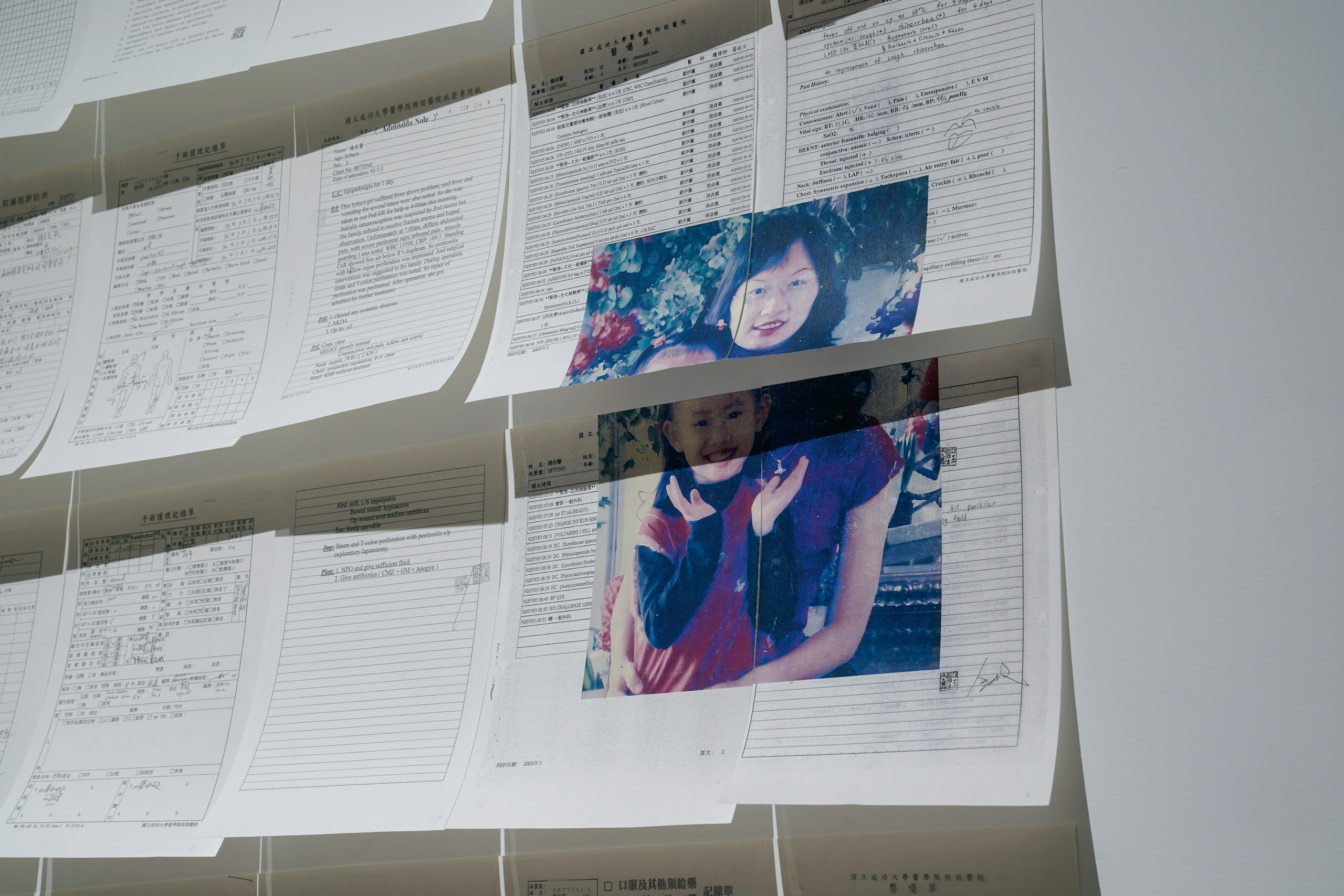
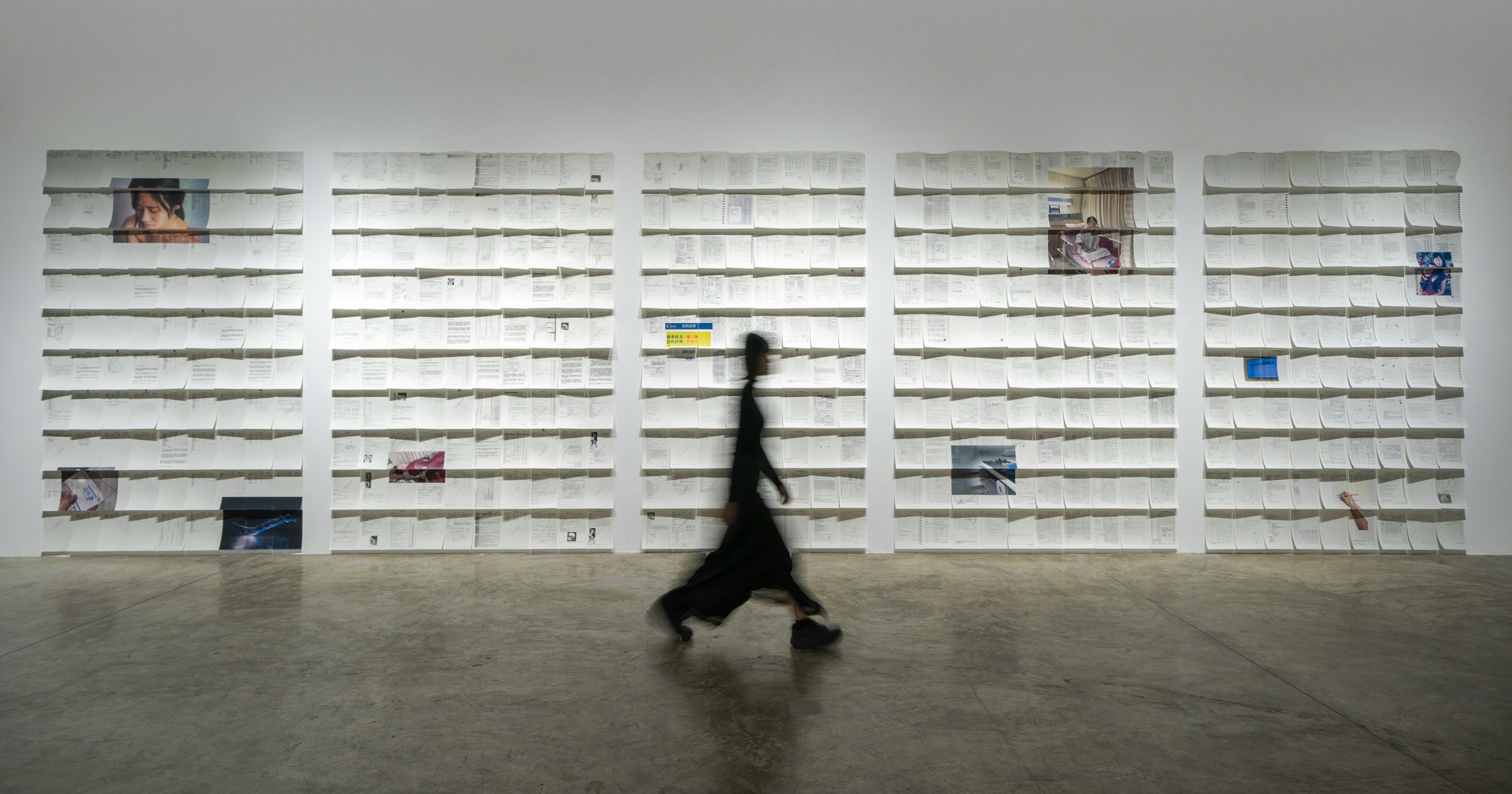
©︎ Yang Chia-Hsin, 08773545, paper, photographic paper, acrylic, pushpins, 2025.
The most memorable instance of “chance” occurred during a guided gallery tour. I overheard a conversation between a father and his daughter, who was perhaps nine or ten years old. The work on view reconstructed an archive of the body—my personal medical history—and explored how experiences of care are shaped through embodied experience, as well as the responses that arise within intimate relationships.
Their conversation moved me deeply. Holding his daughter, the father quietly contemplated my medical history and, in a calm and gentle voice, explained to her what illness is and what death is…. I remained silent, listening and feeling as I took in his words and the girl’s responses…. The experience prompted me to reconsider my own work and the many different parts of the human psyche that artistic practice may be able to reach.
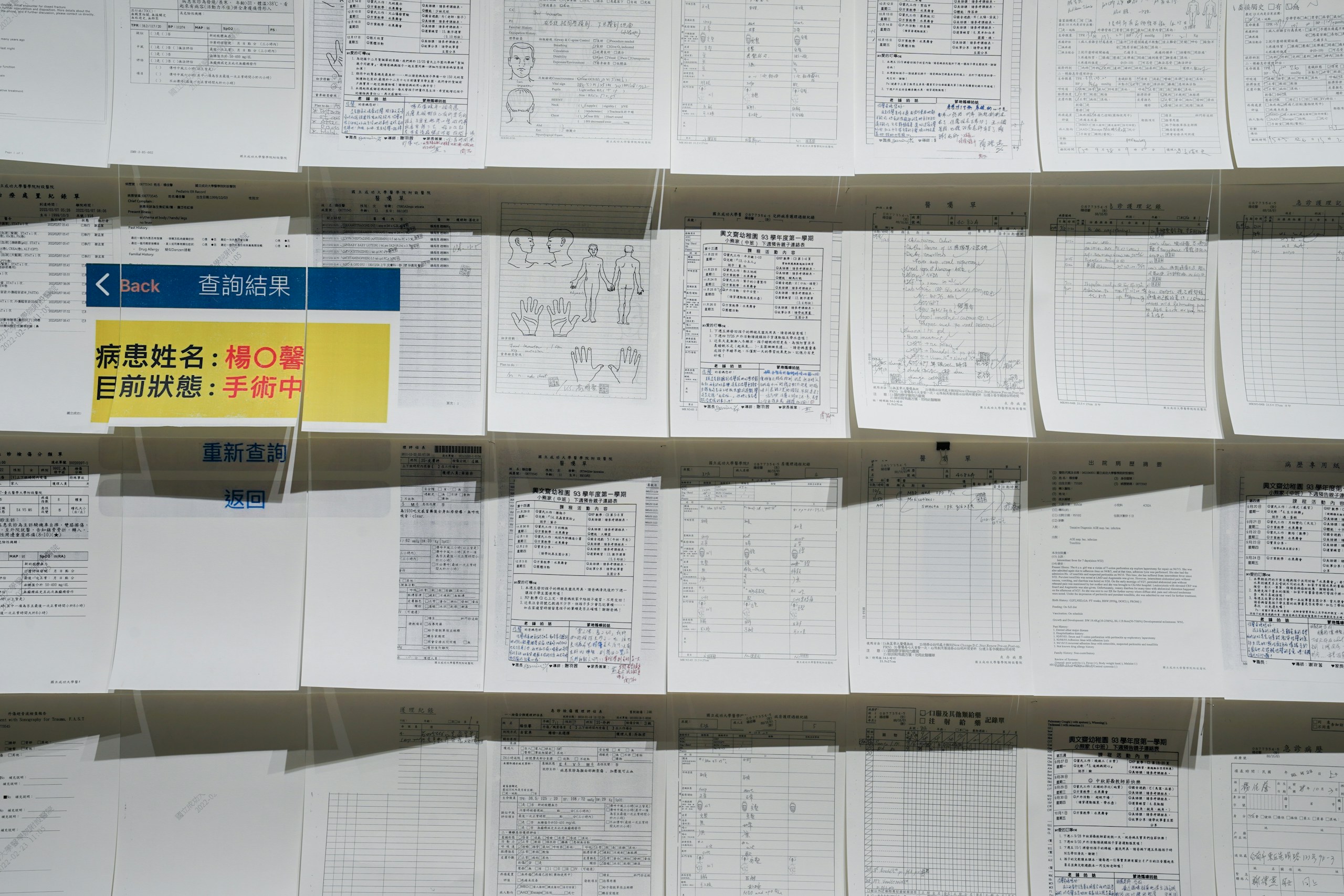
©︎ Yang Chia-Hsin, 08773545, paper, photographic paper, acrylic, pushpins, 2025.
A glimpse or a single remark can become the spark for a work. If we are unafraid to encounter the unfamiliar, what lies close to the human heart, the private, and moments that unfold gently and naturally, chance can become a catalyst that sets a work in motion. When a work touches someone’s memory or questions and gives rise to an intimate conversation, perhaps that is the moment when the “public intimacy” I envision quietly takes shape.
Space and time are both media that sustain artistic production—something like a “time zone.”
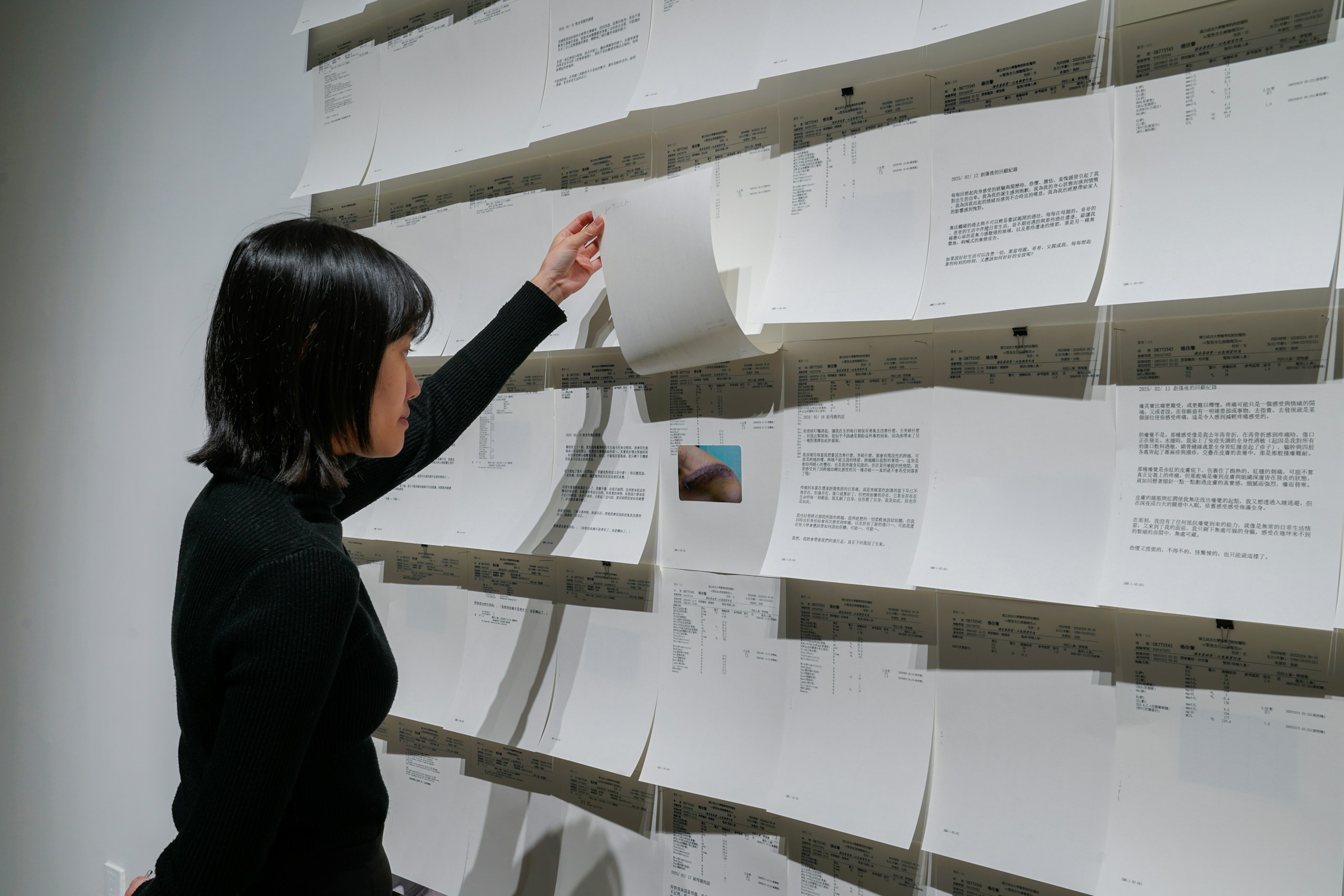
©︎ Yang Chia-Hsin | 楊佳馨
When installing work, I place particular importance on the fluidity of moving “from exhibition space to the opening-and-closing space of the book.” In other words, I attend to the connections, extensions, and dialogues between works and between spaces.
Through forms such as artist’s books and spatial installations, I am adept at articulating the details of places, events, experiences, sensations, and atmospheres. By arranging elements such as objects, images, archives, sound, sculpture, and action—and by enabling audiences to engage with the work through different bodily postures across varying spaces and modes of exhibition—I seek to open up an empathy through which the work can be experienced anew.
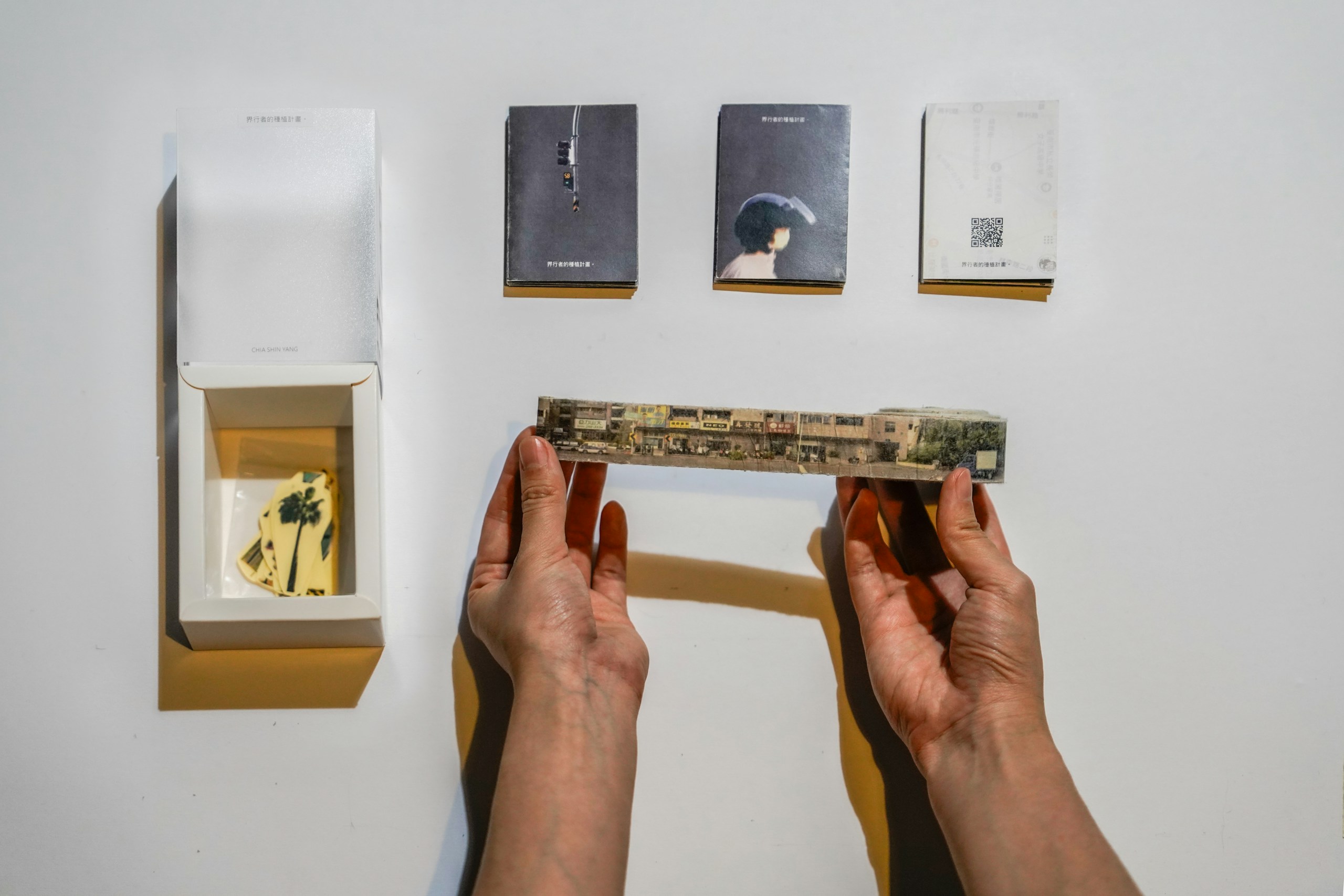
©︎ Yang Chia-Hsin, The Borderwalker: A Planting Initiative, paper, wood, cardboard, stickers, boxed edition, 8.1 × 10.5 × 4.1 cm, 2025.
For me, then, a work is not merely something viewed on a wall or within a book; it is also something experienced again among the audience’s bodies, memories, and senses.
For example, in The Borderwalker series, developed from 2025 into this year, I began with the spatial character of a “domestic exhibition room.” Through a practice of “repairing space, composing images, and editing books,” I developed an imagining of “intimate relationships in public space.”
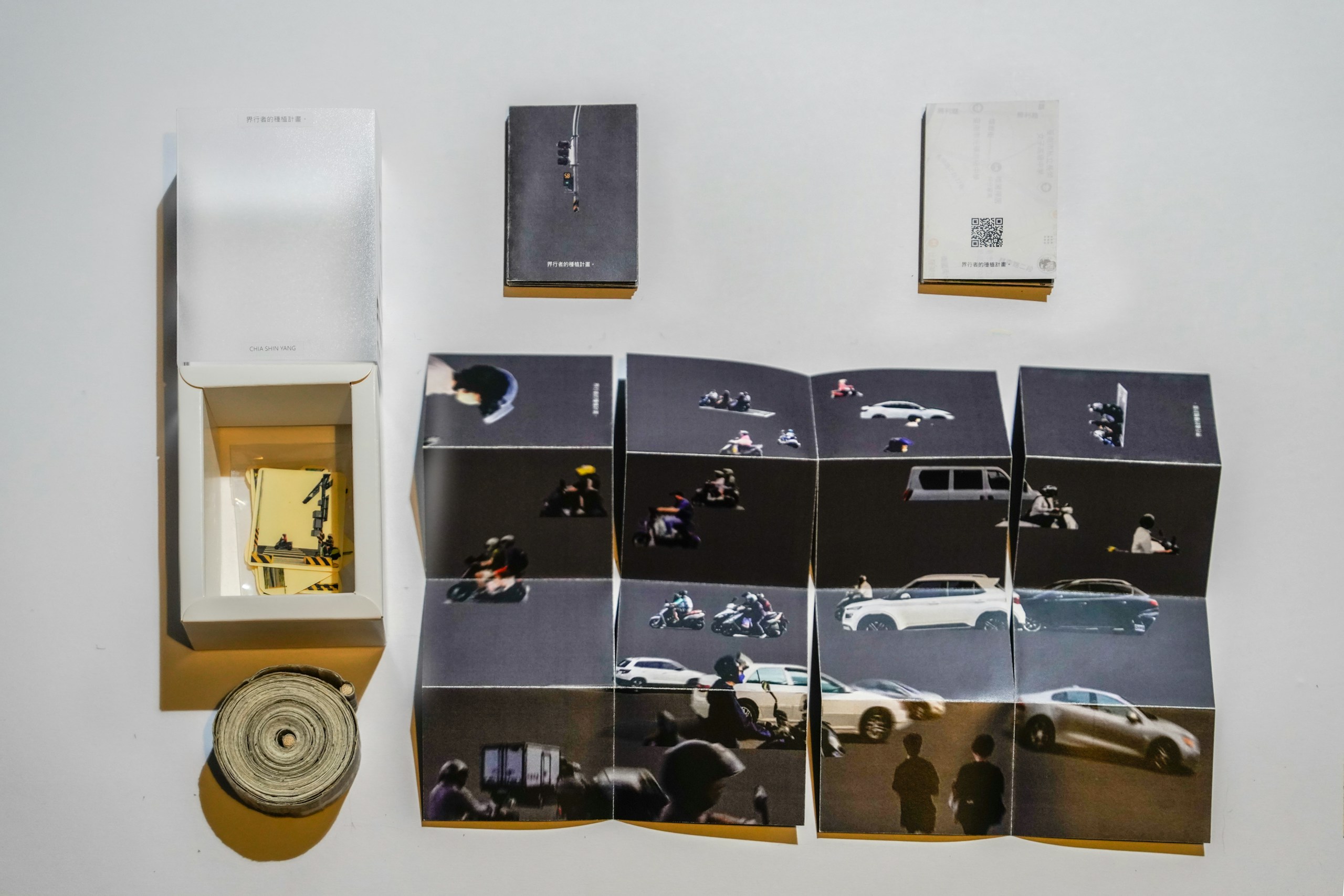
©︎ Yang Chia-Hsin, The Borderwalker: A Planting Initiative, paper, wood, cardboard, stickers, boxed edition, 8.1 × 10.5 × 4.1 cm, 2025.
Every role and position in the art world merges with and influences the others.
Curators, artists, creators, and participants—audiences and others—all play vital roles in shaping the contexts in which art emerges. In the course of my artistic practice, I am simultaneously a creator, a curator, and someone working behind the scenes.
The convergence of multiple positions creates greater possibilities for observation and understanding.
The way we look at images is never confined to a single role. “Looking at an image from the perspective of sculpture; looking at an image from the perspective of the image; viewing a still image from a moving-image perspective, or vice versa”—these approaches differ, yet remain interconnected. Holding the perspectives of both artist and curator allows me to perceive an artist’s trajectory within artistic practice.
It also leads me to pay closer attention to how ideas and concepts emerge consistently and acquire context: how interpretations grounded in critical concerns and artistic expression are formed, extended, and interwoven within the exhibition space, then integrated into an artistic world communicated to participants. “Always facing the audience” is an unavoidable and essential question.
I believe Taiwan offers tremendous freedom for artistic production.
Following the pandemic, numerous alternative spaces, photography bookstores, and independent publishing collectives have been established across northern, central, and southern Taiwan. For artists working with still and moving images in Taiwan, independent publishing has become another path distinct from exhibition-centered practice.
Opportunities to submit work to international book awards, obtain publishing grants, and participate in overseas book fairs have also increased, further invigorating exchange. In 2026, a Taiwanese organization dedicated to researching artist’s books established the “PHOTO GO / PAPER MATTER Photobook Awards,” creating yet another platform for artists to present their ideas and practices.
In terms of exhibition opportunities, the emergence of many alternative spaces has also provided more worthwhile places and methods through which to experiment and think about space.
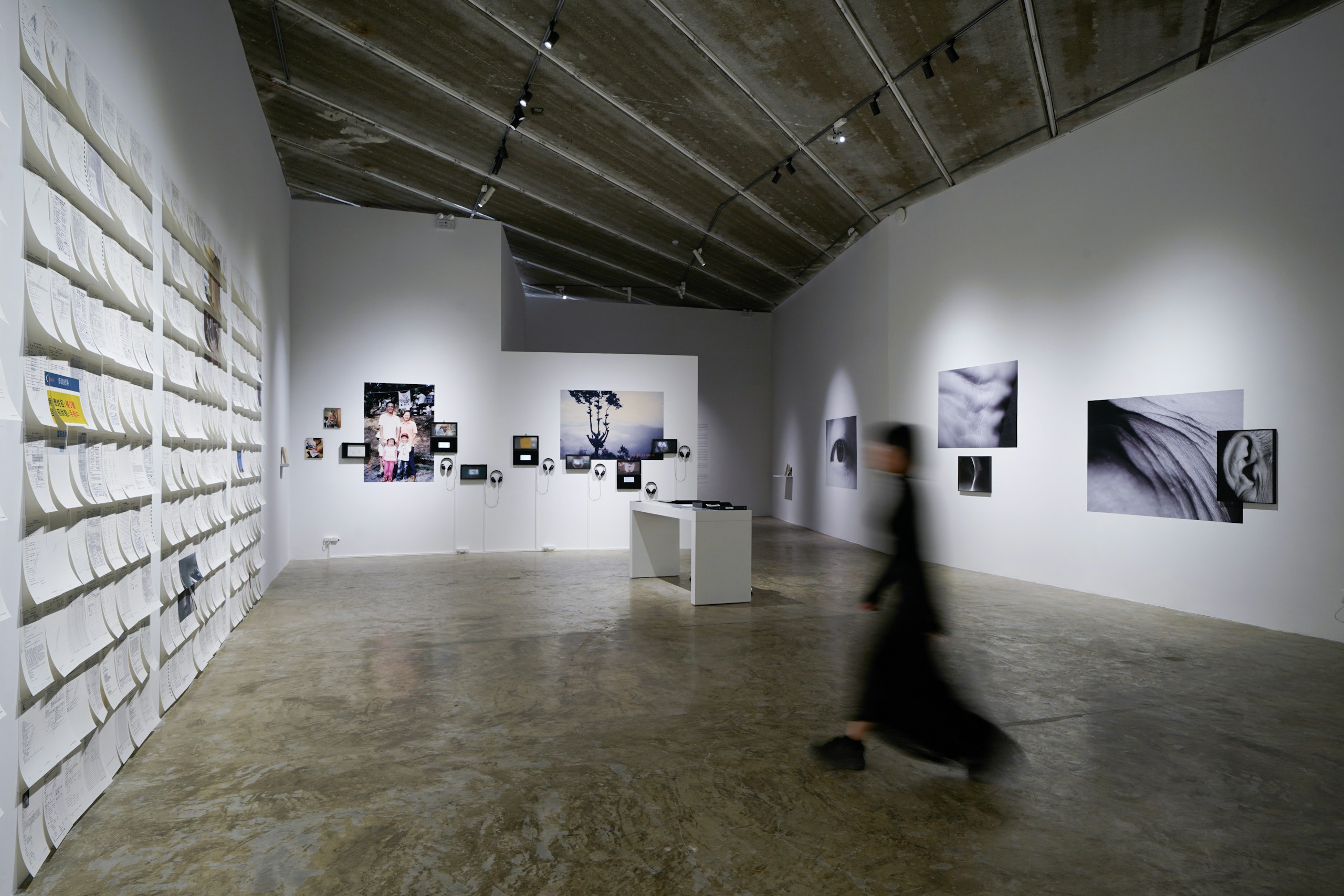
Yang Chia-Hsin’s spatial installation 08773545 was presented in the group exhibition Metal Odyssey at Three Shadows Photography Art Centre in Beijing, China, in 2025.
Organized by: Three Shadows Photography Art Centre and CHANEL
Exhibition space: Three Shadows Photography Art Centre, Beijing, China, 2025.
We should be grateful for the freedom to create in Taiwan, for the convergence of diverse possibilities, and for the role of every organization, team, and artist-run space that enables artistic production to continue. Of course, I also hope that every person pursuing a creative path will remain tenacious, continue to nurture their practice, and keep shining.
Experimenting freely, creating spaces, and supporting one another: within this cycle, I believe photographic expression in Taiwan is gradually taking on new forms.
Everything you have mentioned is important!
Artistic production unfolds through many stages, each with dimensions that must be confronted and more deeply understood. Encountering the right opportunity, space, and dialogue at the right time is immensely valuable.
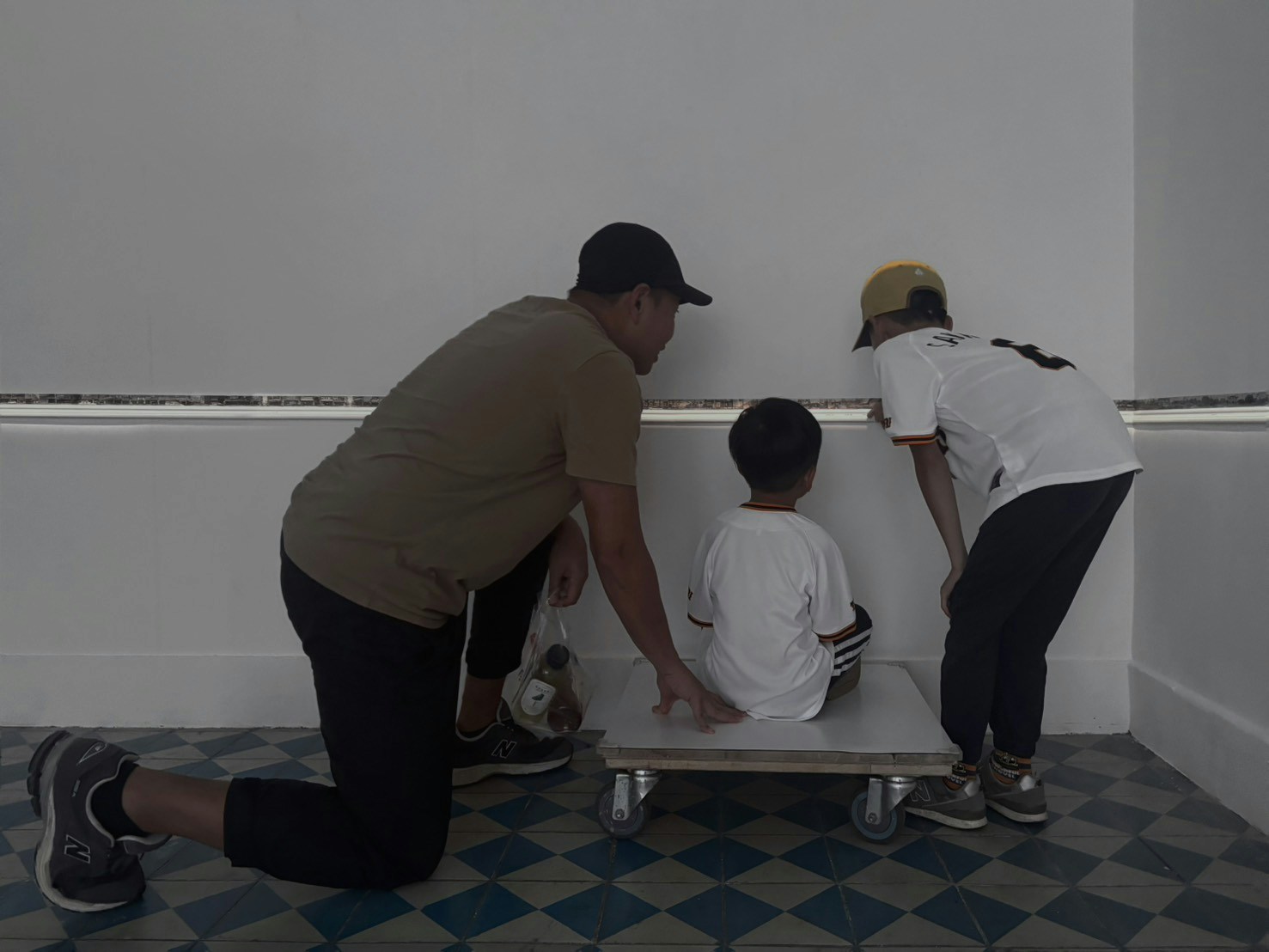
©︎ Yang Chia-Hsin, The Borderwalker, photographs, kozo paper, sound installation, 7 min. 26 sec., 2025.
My artistic practice confronts experiences and events that are difficult to narrate or face directly—things from which people avert their gaze or cannot readily put into words. Many dimensions remain to be developed, including the psychology surrounding illness and the philosophy of medicine, diverse forms of women’s embodied experience, the phenomenon of intergenerational communication, and social calamities with more complex structures.
©︎ Yang Chia-Hsin | 楊佳馨
Of course, some things cannot be put into words. Let us leave them as things to be discovered within art and within life.

36 Magazines
An interview series featuring photographers and photography media from around the world, each pursuing a distinctive approach to visual expression. Through ten questions, we explore how they discovered photography, the origins of their creative practice, and the ideas behind their work, bringing fresh perspectives and inspiration to creators everywhere.