MAGAZINE
MAGAZINE
MAGAZINE
MAGAZINE
By cizucu ·
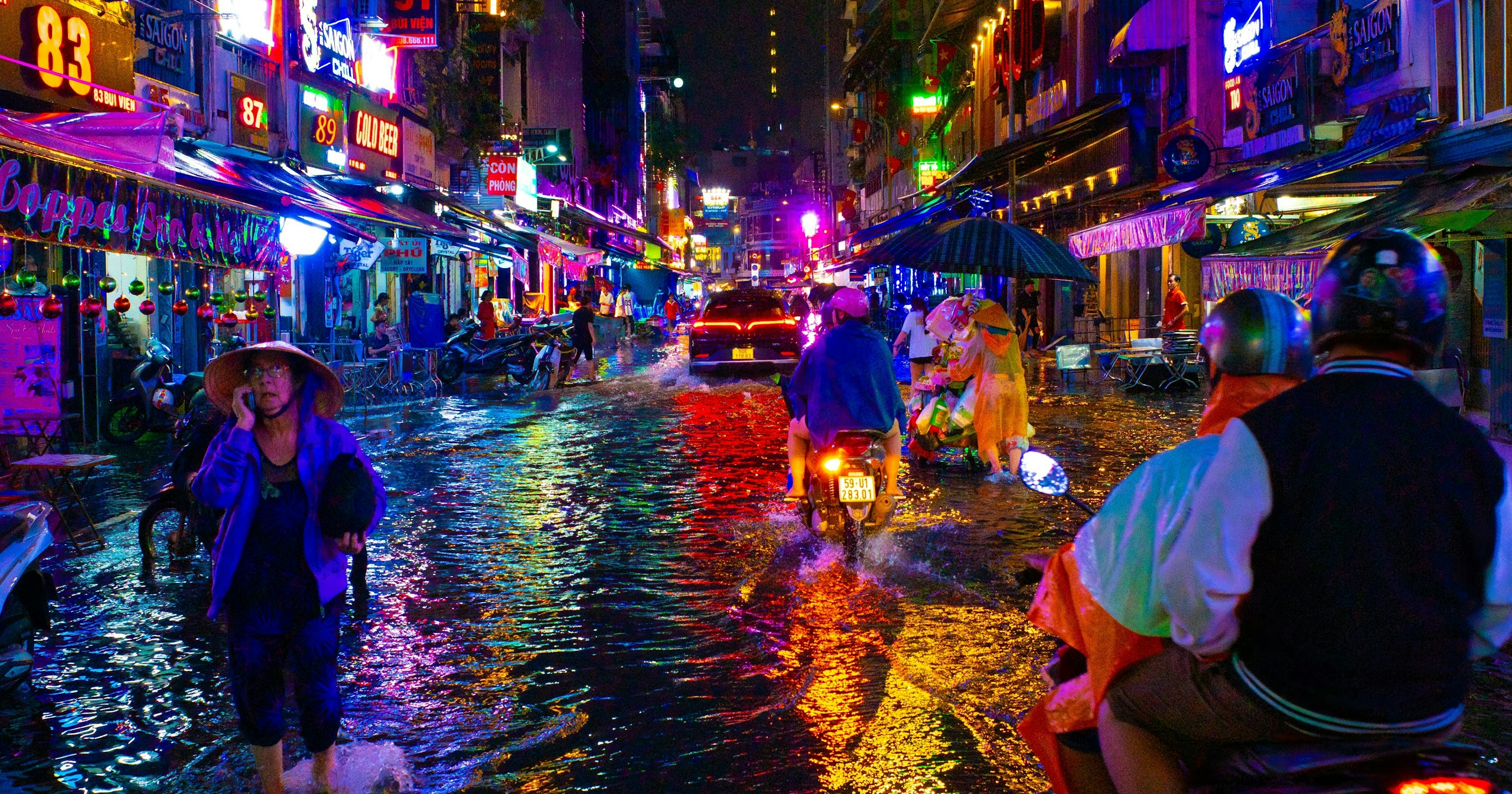
Cover photo by masashi7069
When a night photograph feels cinematic, it is not necessarily because a powerful light is present. What matters more than the light itself is observing where that light falls. The color of a sign, illumination spilling from a storefront, the backlight of a streetlamp, or neon reflected on rain-washed pavement—a place you might overlook during the day can become a small stage at night.
Night removes extraneous visual information from the frame. Shadows submerge the background, allowing only the illuminated areas to emerge. This contrast brings the suggestion of a narrative to an otherwise ordinary moment on the way home. Whether you are using a smartphone or a camera, begin not by searching for a bright place, but by looking for where light touches a person, a wall, or the ground.
When you encounter neon or an illuminated sign, it is tempting to photograph the light itself. To move closer to a cinematic night photograph, however, the key is to treat the sign not as the subject of the image, but as something that illuminates it. Look for a person standing beneath the sign, a wall absorbing its color, or a pavement where its light falls, and a natural focal point will emerge within the frame.
Consider the moment someone passes in front of the red sign of an izakaya. By placing the sign at the edge of the frame and including a profile or a pair of feet caught in its glow, an ordinary storefront becomes a scene. Rather than centering the bright lettering, step back slightly to take in the reach of the light; this makes it easier to capture the atmosphere of the night as well.
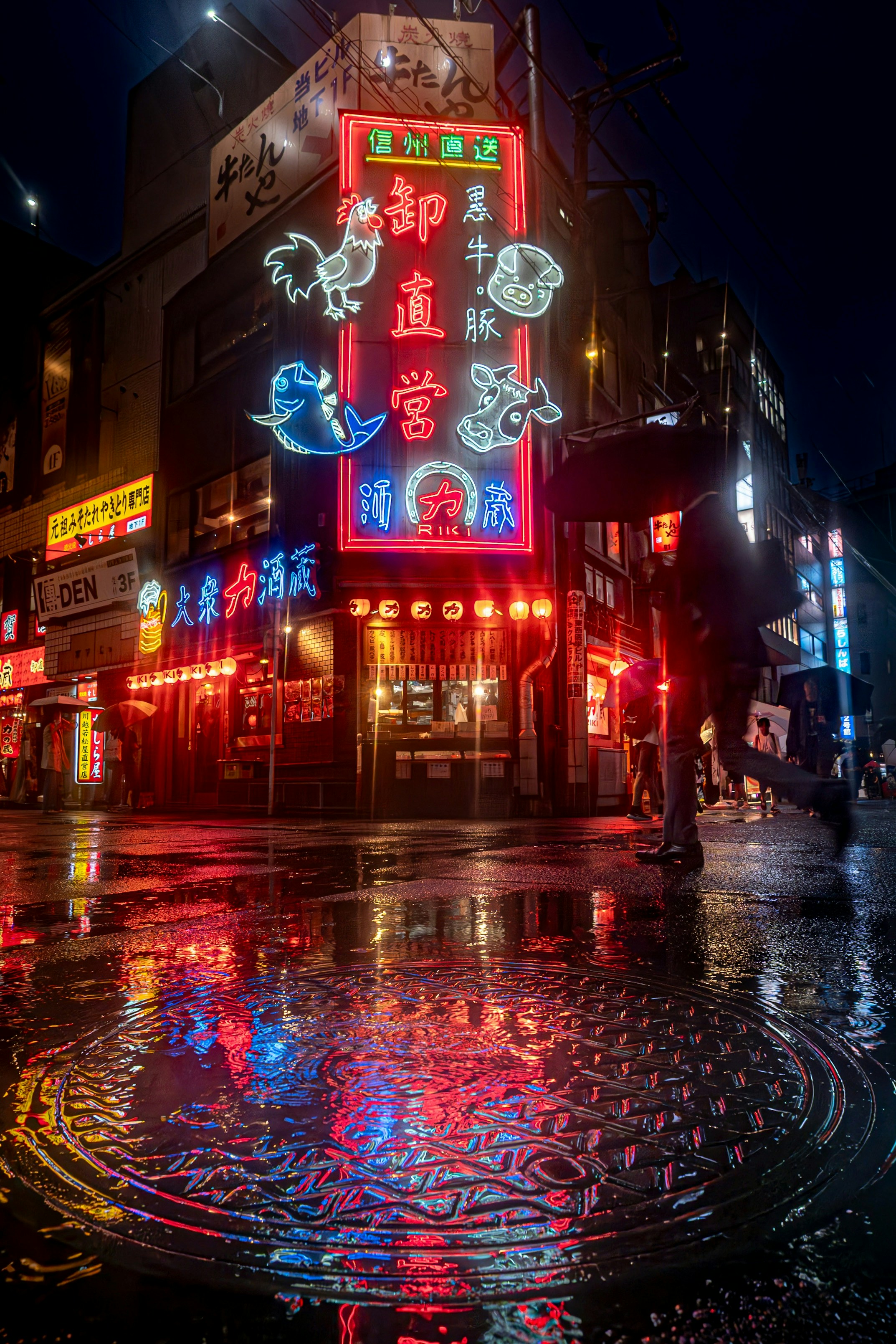
Photo by 川﨑悠貴
When using a smartphone, tap the screen to expose for the brightness of the sign and consider shooting slightly darker. Preventing blown highlights helps preserve the richness of the colors. With a camera, a fast prime lens can make things easier, but especially at first, waiting for a subject to enter the place where the light falls is more effective than relying on equipment.
The most versatile light in the city at night is the illumination spilling from shop entrances and windows. Convenience stores, ramen shops, cinemas, and shopping streets approaching closing time—the light through an open door or behind glass softly reveals the outline of a person and the texture of a wall. Compared with overpowering neon, subtler spill light often produces photographs with a greater sense of lived experience.
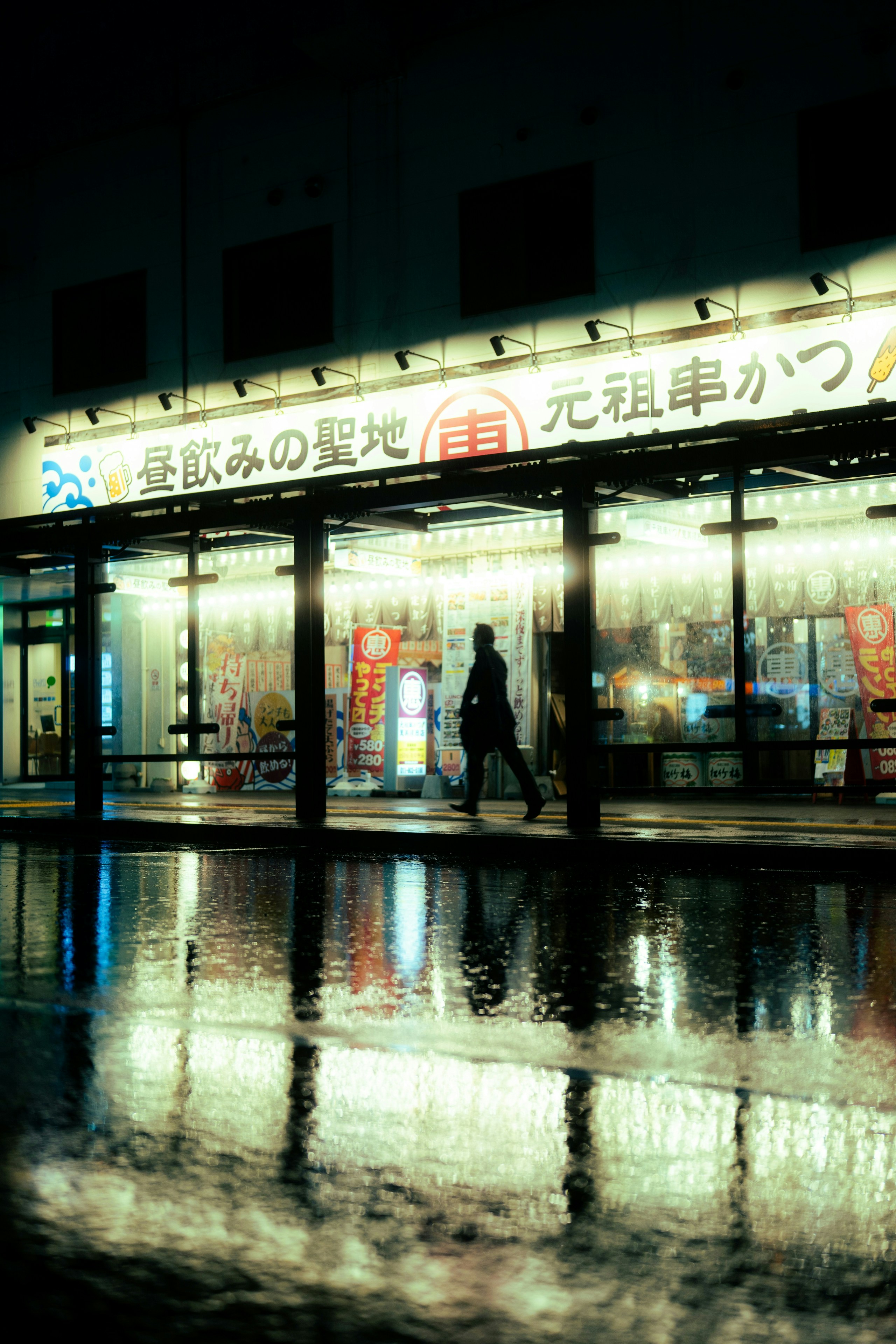
Photo by HAYATO
If you are photographing on your way home, take a step back outside a shop and look for an angle that frames the entrance from the side. A person emerging from the shop, hands closing an umbrella, or a figure seen from behind in the glass—you do not need to reveal an entire face. Hands, feet, or a shadow alone can be enough to evoke a story.
It is also important not to overcrowd the background. One light source, one subject, and one area of shadow: the fewer the elements, the more coherent the nocturnal frame becomes. If photographing people feels difficult, use a bicycle, a transparent umbrella, or a chair outside a shop instead. Make whatever the light touches your central subject, and the composition will naturally come together.
Streetlights are more effective as backlighting than when photographed head-on. Place a person beyond the light, and facial details disappear, leaving only a silhouette or outline. This introduces visual breathing room into a night photograph. By avoiding excessive explanation of who the person is, you allow viewers to imagine the story that comes before and after the captured moment.
After rain, the pavement and puddles become powerful creative allies. When neon, traffic signals, and car headlights reflect across the wet ground, light also fills the lower half of the frame. In places with lines on the ground—beneath overpasses, at pedestrian crossings outside stations, or along parking-space markings—the reflections can guide the eye into the depth of the image. Shooting from a slightly lower vantage point emphasizes the way the light extends through the frame.
Night photography is not only compelling at midnight. Just after sunset, while a trace of blue remains in the sky, the colors of signs and streetlights can coexist more easily with tonal detail in the background. Before the sky turns completely black, the contours of the city remain visible, giving the photograph a stronger sense of place.
There is another kind of appeal, however, in the hours when shops begin to close. Someone lowering a shutter, someone hurrying home, someone buying a late-night meal—as the flow of people begins to settle and the lights are left behind, the city takes on a temperature distinct from that of the daytime.
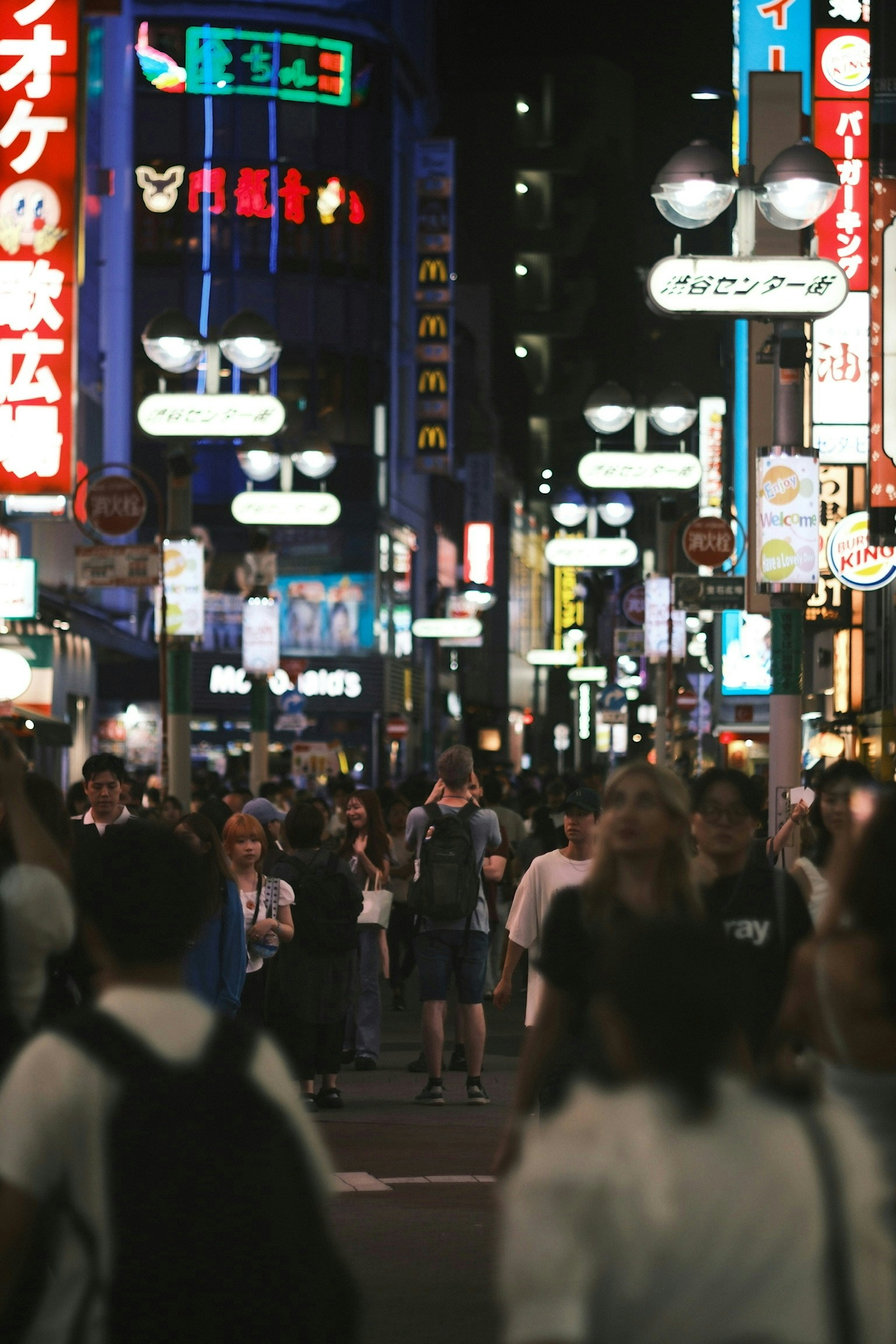
Photo by 吉田 草風
To begin, try taking a ten-minute detour on your way home. Walk while searching for just one element: a sign, spill light, a streetlamp, a reflection, or a silhouette. Night photography is not about overcoming darkness; it is about using what the darkness conceals to your advantage. Once the way you look for light changes, you will begin to notice that even familiar streets still hold scenes you have yet to photograph.


